
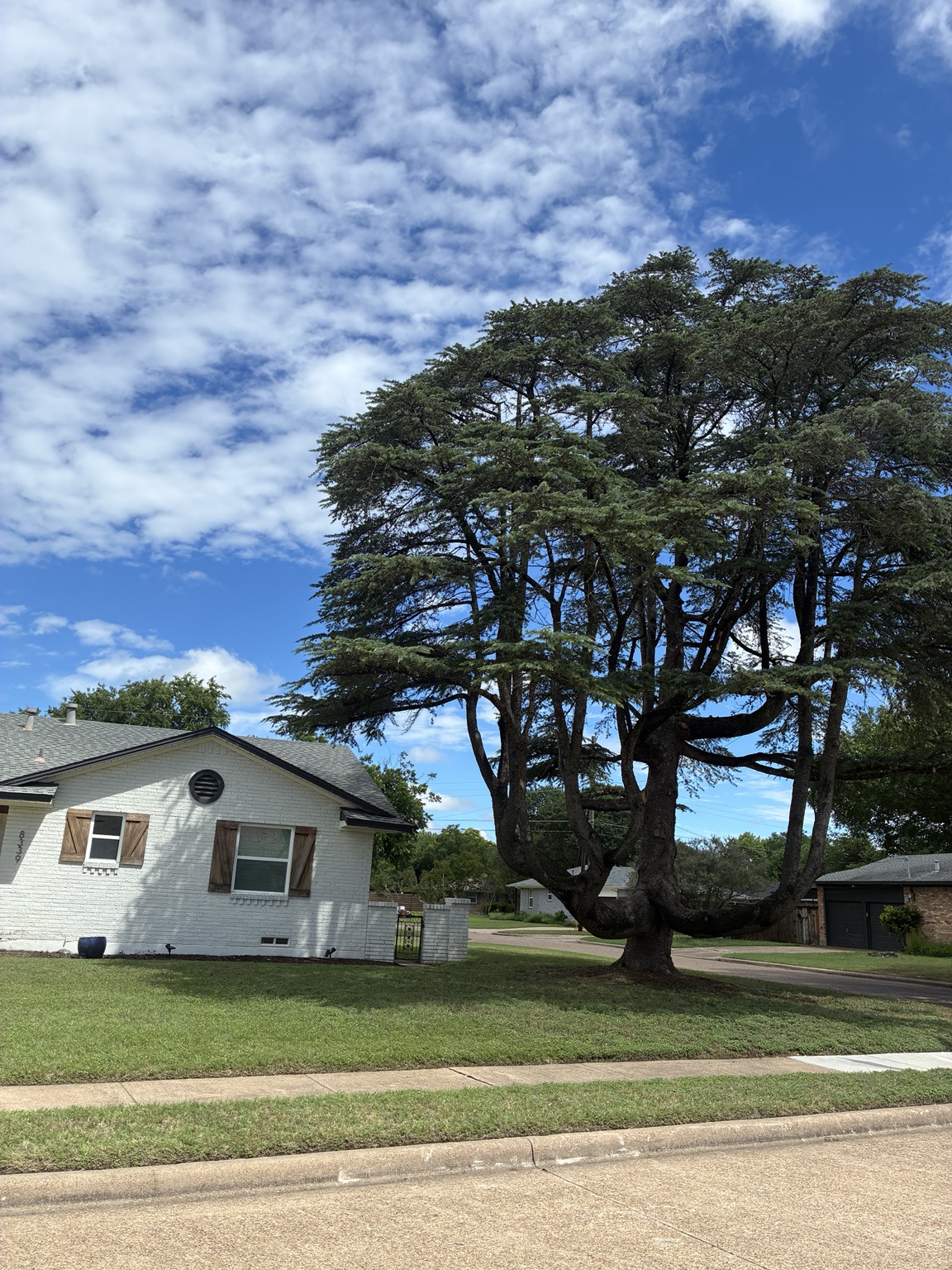
Root Barriers · Rowlett & Rockwall, TX
Root Barrier Installation In Rowlett & Rockwall, TX
Protect your foundation, driveway and sidewalks from tree roots — without losing the tree. Root barrier installation in Rowlett TX that stops the damage and keeps the shade.
The Problem
It's The Clay. And What's Under It.
Most of DFW sits on Blackland Prairie clay. That soil swells when it's wet and shrinks hard when it dries — and most homes here sit on slab foundations that ride that movement.
A large, established tree next to the house pulls a serious amount of moisture out of the soil beside your slab. The ground dries unevenly — wet on one side, dry where the roots are feeding — and that uneven shrink-and-swell is one of the most common contributing factors in foundation movement across North Texas. It's rarely the only cause, but it's a real one, and it's the one you can actually do something about.
Above ground, the same roots lift sidewalks into trip hazards, crack driveways along the tree side, and find their way into older sewer lines. Tree root foundation damage in Dallas isn't rare — it's just quiet, right up until it isn't.
The Fix
A Wall The Roots Can't Run Past.
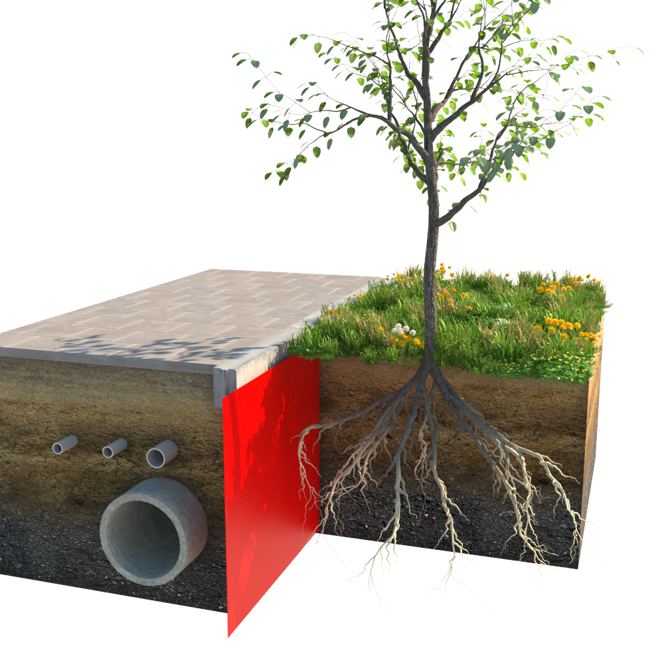
A root barrier is a rigid HDPE panel installed vertically in a trench between your tree and whatever it's threatening.
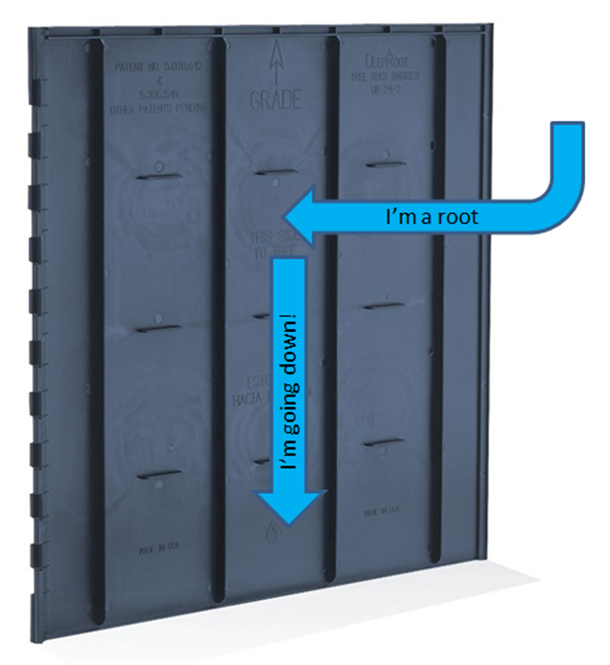
The panels are ribbed on purpose. When a root tip hits the ribs, it gets deflected downward and along the barrier instead of running sideways into your foundation bed, driveway base or sidewalk. The tree keeps its root system — it just gets rerouted away from the protected area.
Panels interlock so roots can't slip a seam, and the whole trench gets backfilled and compacted when we're done. The top edge sits just below grade. Once we rake out, there's nothing to see — no plastic lip, no hardware, no sign we were there.
Installed Vertical
Set in a trench between the tree and the structure, at the depth your soil and species call for.
Ribbed HDPE Panels
Roots deflect down the ribs instead of through. HDPE doesn't rot, rust or degrade in soil.
Invisible When Done
Interlocked, backfilled, compacted and raked out. Nothing above grade, nothing to maintain.
Install Day
Four Steps. One Day, Usually.
- 01
On-Site Assessment
We identify the tree and species, figure out where the roots are running, and mark every utility before a shovel touches the ground. Barrier depth and distance from the trunk get decided here — not guessed at from the truck.
- 02
Trenching
A narrow trench is excavated along the structure to the depth we agreed on. We keep it tight so your turf and beds come back clean, and we watch for irrigation lines the whole way.
- 03
Root Pruning
The roots growing toward your foundation or sidewalk get cut cleanly with sharp tools — not torn with a bucket. Clean cuts let the tree seal the wound and compartmentalize instead of fighting rot.
- 04
Barrier Install & Backfill
Interlocking ribbed HDPE panels go in vertical, seams locked, top edge set just below grade. The trench is backfilled and compacted, the site raked out — when we leave, nothing is visible but your yard.
Good Fit
When A Barrier Makes Sense.
If any of these sound like your yard, a root barrier is probably the cheapest permanent answer you've got.
- Cracks in a slab or brickwork near a mature tree
- A sidewalk lifted into a trip hazard
- A driveway cracking along the tree side
- Recurring root intrusion in a sewer line
- A new tree being planted near hardscape
- A mature tree you want to keep, not lose
The Honest Comparison
Barrier Or Removal?
We'll sell you either one, so here's the straight version. A barrier wins most of the time — but not all of the time.
The Tree
Root Barrier
Stays. Shade, privacy and the look of the yard are untouched.
Tree Removal
Gone — along with decades of growth you can't buy back.
Property Value
Root Barrier
Mature trees add real value and curb appeal in North Texas neighborhoods.
Tree Removal
Removal plus replanting costs more and a sapling takes 20 years to catch up.
The Cost
Root Barrier
Priced per linear foot — usually well under removal, haul-off and replanting combined.
Tree Removal
Large tree removal near a structure is one of the most expensive jobs we do.
When It's The Wrong Call
Root Barrier
Not every tree qualifies. Too close to the structure, or the root plate is already under the slab.
Tree Removal
The better call when the tree is declining, structurally unsound, or too close for a barrier to help.
Removal is the better call when the tree is already declining, structurally unsound, or planted too close to the structure for a barrier to do its job. See our removal work if that's where you're headed.
The Fine Print, Up Front
What A Barrier Can't Do.
It Can Destabilize If Overdone
Cut too many roots on one side of a tree and you've traded a foundation problem for a fall hazard. That's why we assess first and prune conservatively.
Depth Isn't One-Size-Fits-All
Barrier depth and distance from the trunk depend on the species, the age of the tree and your soil. A live oak and a silver maple are not the same install.
Sometimes We Say No
Hunter's assesses every site before recommending a barrier. If it's not the right solution for your tree and your house, we'll tell you that to your face — and tell you what is.
FAQ
Root Barrier Questions, Answered.
Straight answers, no runaround.
Will a root barrier kill my tree?
Not when it's done right. We prune roots on one side of the tree only, stay outside the critical root zone, and cut cleanly so the tree can compartmentalize the wounds. A healthy, established tree tolerates that well. If we look at your tree and the cut would take too much of its root system, we'll tell you a barrier isn't the right move.
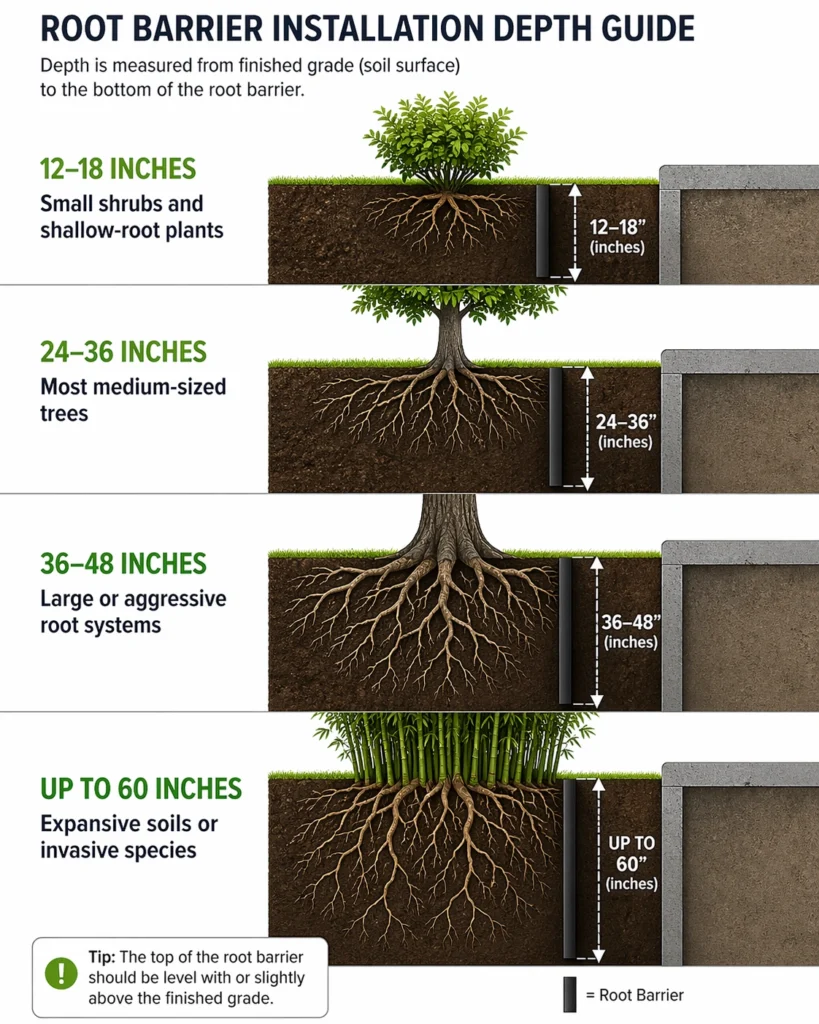
How deep does the barrier go?
Most residential installs run 24 to 36 inches deep, depending on the tree species, the soil and what we're protecting. North Texas clay holds roots fairly shallow, so a properly seated barrier at the right depth stops the surface runners that lift walks and pull moisture from next to a slab.
How long does a root barrier last?
Rigid HDPE panels don't rot, rust or break down in soil — the material itself outlasts the tree. The ribbed design keeps deflecting new root growth downward for decades. It's a one-time install, not a maintenance item.
Will it fix cracks I already have?
No — and anyone who tells you otherwise is selling you something. A barrier stops the roots from making things worse. Existing slab cracks, lifted sidewalk panels and sewer line damage still need their own repair. What a barrier does is keep the problem from coming back after that repair is made.
How much does a root barrier cost?
It's priced per linear foot after an on-site assessment. Depth, soil conditions, access and how much root pruning is involved all move the number, so we don't quote it sight unseen. The assessment is free and the estimate is written.
How long does the install take?
Most residential root barriers are a one-day job — trench, prune, set panels, backfill and clean up. Long runs along a driveway or tight access next to a structure can push into a second day. You'll know the timeline before we start.
Root Barriers Near You
We install root barriers across Rowlett, Rockwall, Garland, Dallas and the surrounding North Texas communities. Stop tree roots from lifting your sidewalk before the repair bill gets bigger.
Keep The Tree. Save The Slab.
Free on-site root assessment in Rowlett, Rockwall, Garland and Dallas. Written pricing per linear foot before any work starts — and we'll tell you straight if a barrier isn't the answer.